It depends on how you define the supports but assuming that you use rigid body constraints (or even kinematic coupling constraints via keywords) for that (since that’s a common approach), you just have to request history output of RF for reference points of those rigid body constraints:
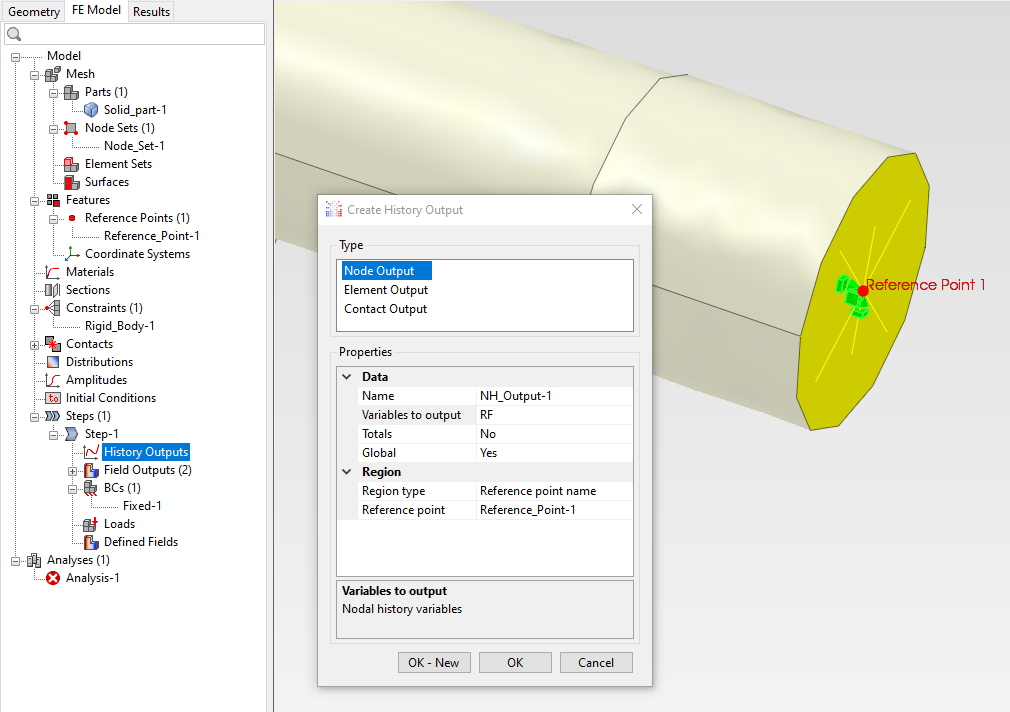
You will then obtain the reaction force output in the Results tab, but only if you define boundary conditions for these reference points.
So, to sum up:
- Define a reference point (you can just specify the coordinates directly).
- Create a rigid body constraint linking that reference point and selected face.
- Apply a boundary condition to that reference point and fix proper DOFs.
- Define history output for that reference point requesting RF and you will get the reaction forces for directions fixed in step 3.